Modern software development is all about high-speed delivery. Speed has become one of the key aspects of success. However, DevSecOps’s mandate for “shift left”- integrating security at every stage of development generates friction. Over the years, DevSecOps has maintained a harmony between speed and security.
But the recent shift towards high-speed development has made DevSecOps a friction-filled approach for many developers. They not only have to deal with frequent context switching and numerous frictions, but also a high amount of false positives introduced by AI-generated codes.
So how does an organisation solve this? Adopting advanced AI-based security assistants. One such tool is QINA Pulse. It is a next-generation security co-pilot, utilising generative AI, intelligent analysis, and smart prioritisation to streamline DevSecOps. It makes security an integral part of the development workflow.
In this detailed guide, we will delve into how organizations can make security seamless for developers through streamlining DevSecOps workflows.
Why Traditional DevSecOps is Frustrating Developers: The Core Issues
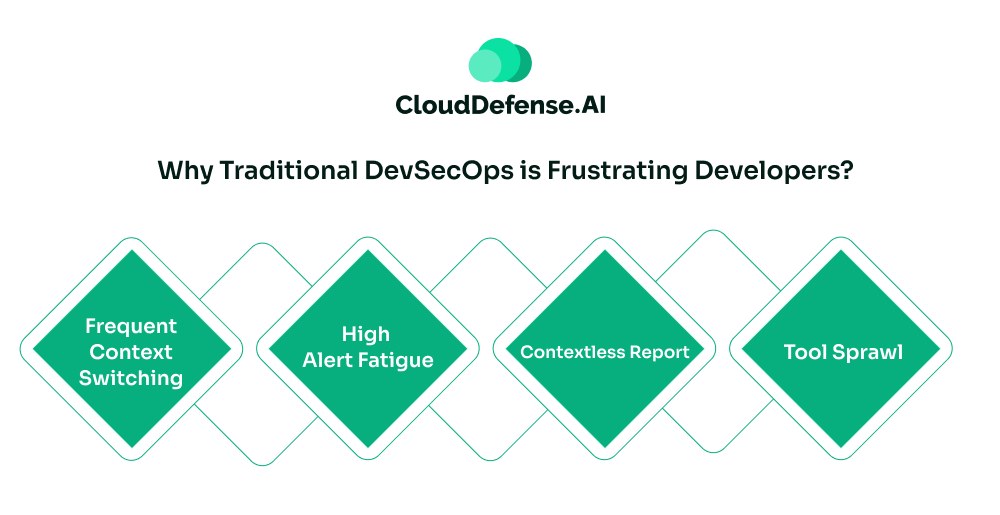
Despite all the benefits of DevSecOps, security has become a distraction for most developers due to all the burdens. All the core hurdles faced by developers are:
- Frequent Context Switching: A major issue with the traditional DevSecOp strategy is the use of standard security tools. It forces the developers to switch from their IDE and work in multiple security dashboards or check Jira tickets. Developers get frustrated and often overlook security tasks or tickets.
- High Alert Fatigue: Traditional shift left tools generate a high amount of “critical” security alerts. Among all the alerts, most of them are false positives or low-priority noise based on the defined business context. Developers have to manually triage all the alerts to determine whether the alerts require a quick response.
- Contextless Report: Most tools utilized in traditional DevSecOps create generic reports. It only tells the developers about the security or “what is wrong”. But it doesn’t offer any guidance on how developers can fix them in context to the specific business intent. Thus, developers have to build a knowledge base or brainstorm about various specific security events to solve them.
- Tool Sprawl: It is a simple yet serious hurdle that developers are facing while using legacy security infrastructure. Every development team has to juggle between different portals, consoles, and security tools like SAST, SCA, DAST, etc, to know about a single threat. It not only causes data silos but also creates friction among developers and security tools.
Streamlining DevSecOps for Developers with QINA Pulse
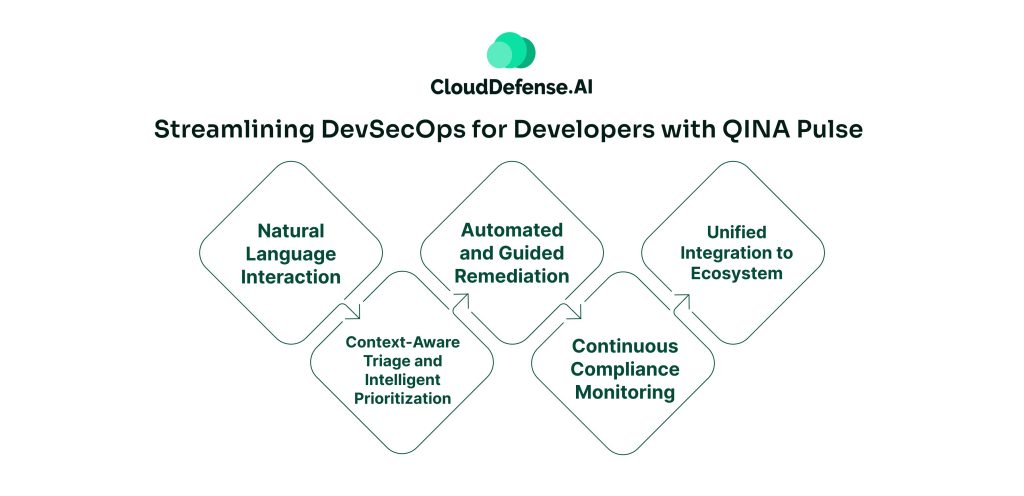
Streamlining DevSecOps workflows to cope with a fast-paced development strategy has become a necessity. QINA Pulse has emerged as the solution that bridges the gap between development and security. It works as a next-generation AI security co-pilot that orchestrates all the security tasks for developers.
Unlike other security assistants, it is designed to integrate directly into the IDE and CI/CD pipeline, allowing it to stay by the developer’s side. Now, it comes down to the question: how does QINA Pulse streamline security for Developers? It makes security seamless by:
Natural Language Interaction
The main highlight of QINA Pulse is its ability to take command in plain English. It stays integrated into the IDE, enabling developers to manage all the security tasks without leaving their workflow. They simply have to “Initiate a security scan for all the latest commits”.
Pulse will instantly run the scan and provide a report within 2 minutes. This streamlines the security task for developers without needing to break the code flow. From triggering scans and generating reports to asking for remediation guidance, the chatops makes all the tasks easy.
Context-Aware Triage and Intelligent Prioritization
A huge friction factor for most developers in DevSecOps is dealing with false positives. But QINA Pulse eliminates it through context-aware triage. It utilizes reachability analysis, predictive analysis, and dead code extraction to understand whether vulnerable code can be triggered in the product environment.
Pulse also looks at the data flow to understand all the possible ways to trigger it. The security assistant also utilizes generative AI and LLM-based reasoning to understand the context of the vulnerable code. In this way, it filters out all the false positives and provides developers with findings that are must-fix threats.
Automated and Guided Remediation
Fixing numerous vulnerabilities has been a major issue for most developers. But the integration of tools like Pulse in the IDE streamlines all the fixing operations. Pulse not only returns feedback about a threat, but it also provides explanations on how developers can fix it. It provides detailed remediation guidance that is tailored to the specific code context.
Usually, remediation guidance is offered with secure code snippets and step-by-step guides. On some occasions, it delivers one-click fixes for developers so that they can quickly remediate any threat. Ultimately, it helps the development team to curb the Mean Time to Remediate from hours and days to a few minutes.
Continuous Compliance Monitoring
Development teams are also partially responsible for maintaining compliance with regulatory standards on a daily basis. Industry standards like GDPR, SOC 2, PCI-DSS, and others require organizations to maintain stringent control.
Pulse enables the development team to continuously map all the code changes directly into compliance and aggregate all the security findings. In this way, it helps the team to create audit-ready reports automatically.
Unified Integration to Ecosystem
Pulse natively integrates with the majority of CI/CD platforms, IDEs, and issue trackers. This unified integration plays a major role in the streaming DevSecOps workflow. When a build fails for any vulnerability, developers can use Pulse to know about the issue through comments in the Pull Request. The comments enable the developers to respond to the threat through PR discussions.
Benefits of Integrating QINA Pulse for the Organization
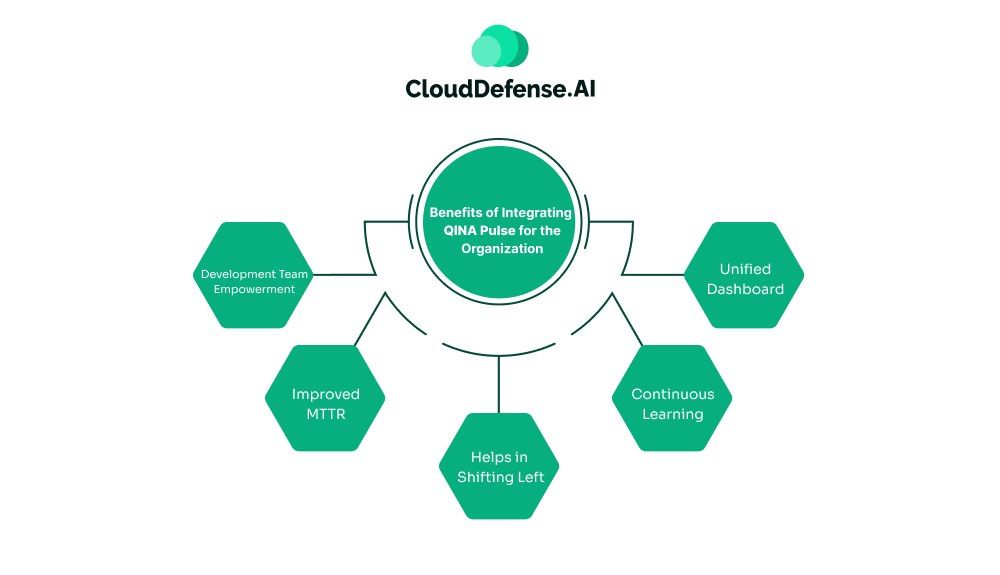
QINA Pulse comes with some robust core characteristics. It not only upgrades the DevSecOps strategy but also brings a shift in the approach.
- Development Team Empowerment: With QINA Pulse integrated into the IDE, it streamlines all the security tasks. Security tasks are one command away from developers. The team can handle all the vulnerabilities they come across during development without having to spend much of their productive time.
- Improved MTTR: For an organization’s security strategy, the Mean Time to Remediation serves as a major aspect. QINA Pulse, as a security co-pilot, enables developers to quickly identify threats and get context-aware remediation suggestions. It comes with code snippets and detailed guidance. This enables the developers to easily investigate and fix the threats in a minimal time.
- Helps in Shifting Left: Another huge advantage of QINA Pulse is that it helps organizations with their “shift left” approach. It enables the development team to run security scans on every PR. All the critical issues are notified directly in the comments along with suggested fixes. Ultimately, it makes vulnerabilities easier and cheaper to fix.
- Continuous Learning: When QINA Pulse gets integrated with all the security tools, repositories, and other components, AI continuously ingests all the data and security findings from all the components. All the ingested data enables the AI to learn from the insights and trends. Based on the development and security workflow, it also learns about the preferences. As a result, Pulse becomes more accurate and efficient-streamlining DevSecOps workflows.
- Unified Dashboard: With this security co-pilot, developers won’t have to juggle between multiple tools. They get a unified dashboard that stays with them in the IDE and provides a complete view of security posture. Everyone in the team can get a view of the other security activities.
Bottom Line
Streamlining DevSecOps workflows in modern times isn’t about integrating numerous security tools. Organizations need to opt for intelligent AppSec tools that make security intuitive, seamless, and smart.
QINA Pulse is one such advanced security co-pilot that enables organizations to move to the next stage of the shift-left approach: “Shift Smart”. It intelligently automates all the tasks through simple English commands. As a result, developers are able to focus on what they do best- develop applications. It forms the critical missing link that enables developers to connect to the security tasks in their language. For organizations wanting to know more, CloudDefense.AI offers a free demo.