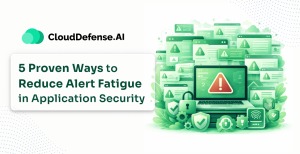
In application security, security alert fatigue has long been a bane for security professionals, as it is both mentally and operationally exhausting. Even in 2026, security analysts and developers are still bombarded by thousands of alerts on a daily basis. However, the major issue with these waves of alert is that a lot of them are false positives.
According to many researchers, a high alert volume is still considered one of the major reasons behind operational inefficiency by many security professionals. Since the AppSec team spends a lot of time triaging numerous alerts, a lot of critical vulnerabilities are often missed.
The solution to this issue? Organizations need to implement proven ways that will reduce alert fatigue in AppSec. However, these strategies are not about minimizing alert volume; a critical move to build a proactive AppSec strategy. In this article, we are going to discuss 5 proven ways organisations can adopt to reduce security alert fatigue.
Impact of High Alert Fatigue in Application Security
Alert Fatigue in AppSec teams results from thousands of security alerts generated from different security scanners. The colossal volume of alerts accompanied by numerous false positives not only impacts the security analysts but also the overall application security.
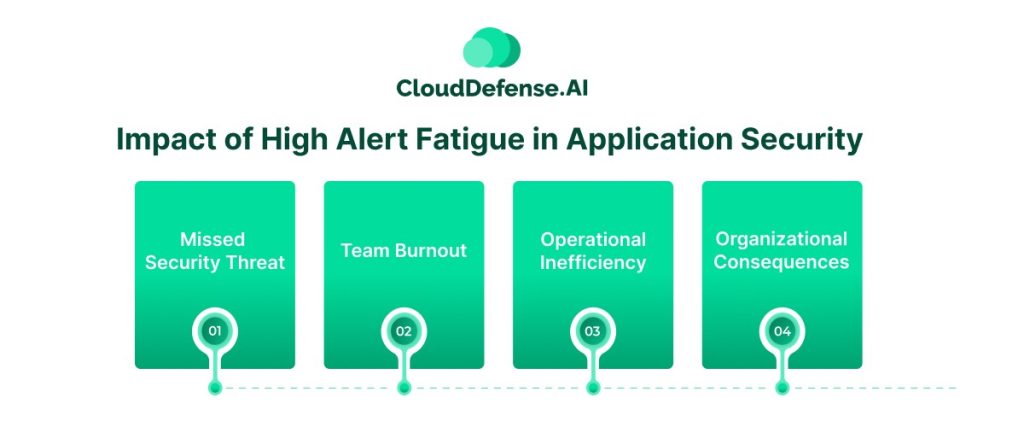
The impacts high alert fatigue has on AppSec are:
- Missed Security Threat: Constant exposure to thousands of daily security alerts makes the security analysts miss out on numerous high-impact vulnerabilities. In some cases, security teams often ignore a critical alert, thinking it will be another false positive or low-priority alarm. Security and development teams have to manually triage the alerts most of the time. As a result, it increases the Mean Time to Respond, allowing attackers to capitalise on the lapse and carry out their motives. Even if the enterprise has numerous AppSec tools in place, delayed response or missed threats keep the overall security in a vulnerable state.
- Team Burnout: The security as well as development team has to triage an endless number of contextless alerts daily. This endless assessment causes severe frustration and eventually develops desensitization towards security alerts. Moreover, high alert fatigue also leads to burnout among security analysts and developers. A huge number of security alerts also eliminates the trust between security and development teams, as they start considering the alert as a bottleneck.
- Operational Inefficiency: A significant impact of high alert fatigue is operational inefficiency. A lot of security resources and work hours are invested in assessing all the security alerts, most of which are false positives. It not only prevents security analysts from participating in critical security activities but also causes them to waste a lot of resources. Moreover, security teams can’t address all the alerts in the same day, which ultimately creates a backlog and becomes difficult to manage over time. Overall, the huge number of alerts slows down the operation and degrades the ROI on security tools.
- Organizational Consequences: The consequences of high alert fatigue on an organization are severe. When a security team is delayed in responding to a severe cyber threat, it leads to a cyberattack. A breach in the infrastructure not only leads to reputation and financial loss but often lands an enterprise in legal consequences. Importantly, a delayed response to vulnerability will lead to compliance violations with different regulatory standards. In such occasions, organizations often have to pay hefty fines to regulatory bodies.
5 Proven Strategies to Reduce Alert Fatigue in AppSec
When it comes to implementing strategies to reduce alert fatigue in AppSec, organizations need to be smart with their approach. However, not all strategies will cater to the requirements of the organization.
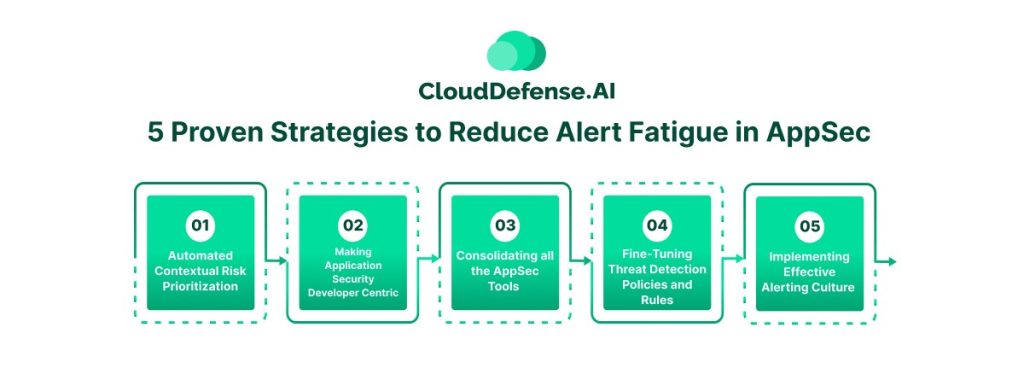
Here are 5 proven strategies that can help teams to minimize alert fatigue:
Automated Contextual Risk Prioritization
Usually, most traditional AppSec scanners prioritize security alerts based on standard severity databases like CVSS. However, this security prioritization isn’t enough. Organization requires automated contextual-based prioritization that considers the business-aspect, developer’s intent, and infrastructure context.
It should automatically assess whether the identified vulnerable code is reachable and whether there is any exploit associated with it during prioritization. By incorporating all the context, it should smartly prioritize the alerts and help teams with managed risk reports. Thus, security and development teams can focus on alerts that matter most.
Making Application Security Developer Centric
Organizations should make sure application security is developer-centric by shifting security left in the development phase. It is an effective way to minimize security alert fatigue. It prevents vulnerabilities from reaching the application production stage in the first place, minimizing the chance of any alert fatigue.
Enterprises need to integrate security directly into the CI/CD pipeline or IDE with the SDLC context. This enables the developers to get feedback regarding security flaws directly into IDE before they reach the build phase. Automated scanning during pre-commit hooks ensures that vulnerabilities are eliminated at the earliest. Democraticized security findings empower developers to easily fix vulnerabilities and minimize any alert fatigue.
Consolidating all the AppSec Tools
Having multiple AppSec tools enables enterprises to enhance their security guardrail. However, using different AppSec tools leads to tool sprawl, which ultimately leads to alert fatigue. Organizations need to opt for a strategy that will consolidate all the AppSec tools in a unified platform. The biggest benefit of consolidating all the AppSec tools is that it offers better visibility, improves threat detection, and minimizes complexity.
Importantly, it ensures the teams won’t have to deal with multiple duplicate security alarms from different tools, which ultimately minimizes the number of alerts. Consolidating security tools into a centralized platform helps with alert correlation and ensures teams get a single correlated alert that offers complete threat detail.
Fine-Tuning Threat Detection Policies and Rules
Most security tools, when used in default settings, create a lot of security alerts, most of which are false positives. These false positives are one of the primary reasons behind security alert fatigue among security and development teams.
However, organizations can minimize it by fine-tuning the security tools based on their organizational requirement. Organizations need to fine-tune their security and scanning policies based on their application infrastructure, technology stack, and coding practices.
Moreover, the scanners should be tweaked with known safe coding patterns and configurations so that they won’t flag them in the future. It would be a great move to disable irrelevant rules that are causing the security tools to generate a lot of false positives.
Implementing Effective Alerting Culture
Changing the culture is an effective way to reduce alert fatigue in AppSec and ensure effective alerting. Every developer and security team must be on board to properly implement an effective alerting culture.
The best way to implement this is for teams to conduct regular meetings where they need to discuss all the alerts. They need to work towards processes that will help in reducing repetitive alerts and ensure teams get alerted about vulnerabilities that matter most. Developers should be trained so that they share the responsibility of code security and the dependencies they are using.
QINA Pulse: A Comprehensive Solution to Reduce Alert Fatigue
In modern cybersecurity, traditional rule-based automation is no longer sufficient. Organizations need intelligent and context-based systems that can understand the reason behind a flagged code and prioritize it accordingly.
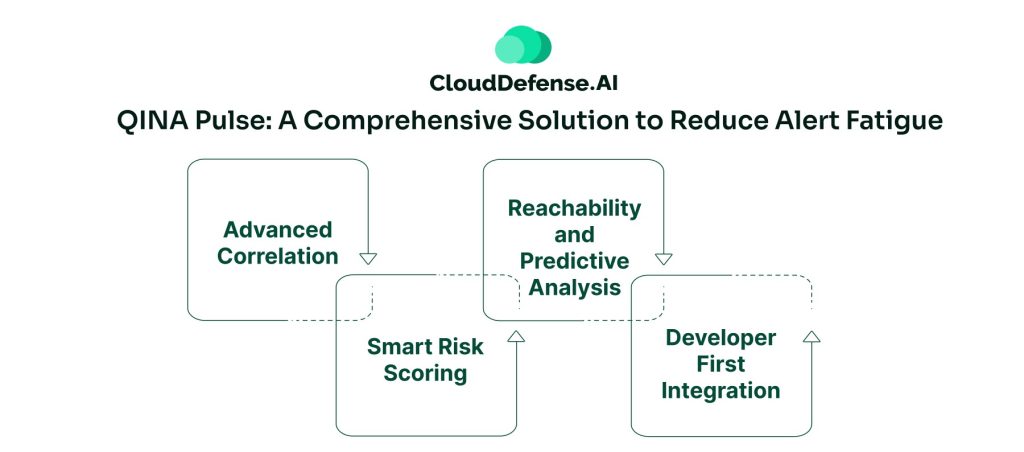
This is where QINA Pulse comes into play. It helps modern enterprises to reduce alert fatigue in AppSec, where the environment is complex and dynamic. It is a next-generation AI security co-pilot that is designed to streamline security and development by reducing alert fatigue significantly. So how does Pulse achieve it?
- Advanced Correlation: QINA Pulse continuously ingests data from all the security tools, especially the scanners, and correlates them. It leverages advanced ML to correlate identical security findings from different layers and consolidate them into manageable security alerts.
- Smart Risk Scoring: To significantly reduce alert fatigue in AppSec, Pulse performs an intelligent risk scoring. It understands the context of each vulnerable code by integrating deep into the code repositories and infrastructure. It also considers application architecture, the developer’s intent, assesses criticality, and business aspects. Based on all the aspects, it intelligently prioritizes the alerts while eliminating all the false positives.
- Reachability and Predictive Analysis: Most security scanners, while assessing any flawed code, don’t consider reachability. However, Pulse considers the reachability of each vulnerable code and assesses whether it can make any impact when the application goes live. It also performs predictive analysis to understand the reach of any vulnerable code.
- Developer First Integration: Unlike others, QINA Pulse integrates directly into the IDE. It not only makes code security a shared responsibility but also streamlines application security for them. Since it integrates natively into the CI/CD pipeline and IDE, it allows developers to get direct security feedback. The natural language interaction allows developers to interact with the security assistant and get the real alerts that matter.
Bottom Line
Alert fatigue has been a consistent issue that has been affecting the effectiveness of applications for a long time. Even though enterprises have made efforts and added modern tools to reduce alert fatigue in AppSec, not all of them have been effective. This article explores all the effective strategies, such as smart prioritization, fine-tuning of policies, and complete automation, that can help organizations to minimize security alert fatigue.
However, manually implementing them can be a stiff task. That is why large enterprises are integrating QINA Pulse in their AppSec that delivers AI-automation, intelligence, and streamlined processes required for alert overload reduction. It serves as a powerful security assistant that significantly reduces false positives and provides a prioritized alert report. To get a hands-on review, organizations can book a free demo at CloudDefense.AI.