
In today’s high-stakes cybersecurity, identifying the vulnerability is no longer the hardest part of application security- the struggle lies in the remediation. CISOs and security professionals have long been struggling with the problem of remediation time. The primary metric of success in cybersecurity lies in how quickly threats can be remediated.
Reduced Mean Time to Remediation (MTTR) has become one of the crucial benchmarks for modern application security. However, the biggest roadblock to achieving reduced MTTR is manual triage- a labor-intensive process of analysing threats, identifying fixes, and applying the patch.
To minimize the MTTR, leadership is adopting patch recommendation automation- a transformative force to ensure quick remediation. At the forefront, QINA Pulse serves as the ideal tool that can help enterprises with patch recommendation automation, compressing MTTR from days to hours.
In this article how organizations can achieve reduced MTTR through patch recommendation automation with QINA Pulse.
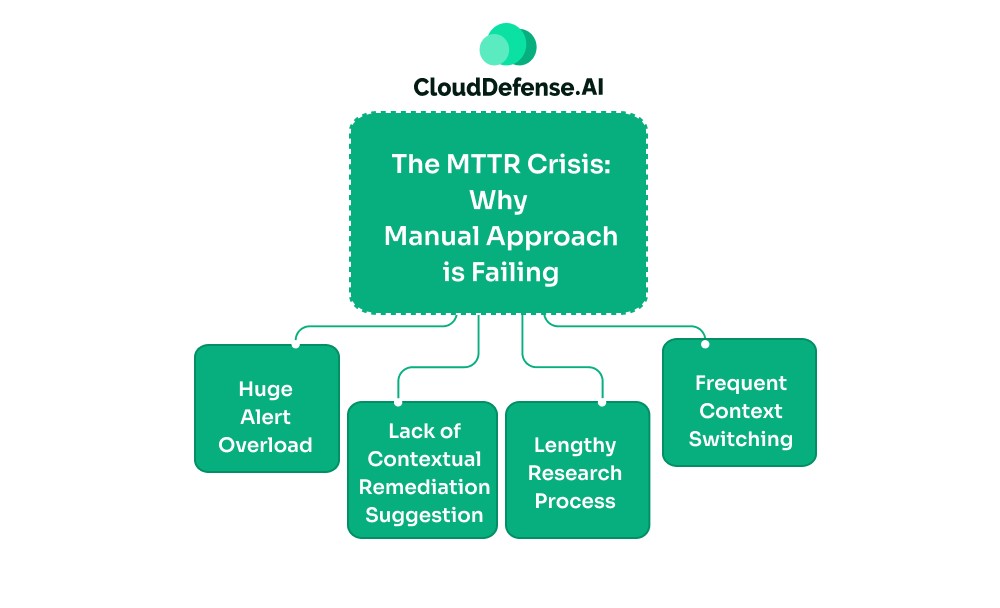
The MTTR Crisis: Why Manual Approach is Failing
The recent surge in the use of multiple microservices, third-party libraries, open-source dependencies, and CI/CD pipelines has made manual triage completely inefficient. In 2025, Verizon’s Data Breach Investigation report stated that exploitation of known threats due to delayed remediation still remains a serious issue.
The primary issue with the manual approach is:
- Huge Alert Overload: Modern security scanners generate hundreds of security alerts, a lot of which are false positives, duplicate vulnerabilities, and low-priority issues. The huge number of alerts not only slows down the whole triaging process but also leads to delayed remediation.
- Lack of Contextual Remediation Suggestion: Many threat scanners, while generating reports, mostly provide what threat has been found. However, they provide information about how to solve those vulnerabilities. Even if some scanners offer remediation guidance, they are mostly generic and don’t offer contextual fix suggestions.
- Lengthy Research Process: Human-led patch management is a time-consuming process. Developers have to spend a lot of time researching what the course of action will be to fix a threat efficiently. It not only causes a significant delay in the remediation process but also enables attackers to take advantage of other vulnerabilities.
- Frequent Context Switching: The lack of a centralized dashboard forces developers and security to switch context and go through security dashboards. On most occasions, developers also have to switch between the ticketing dashboard and the development environment to manage vulnerabilities. This breaks the concentration and slows down the overall patch management.
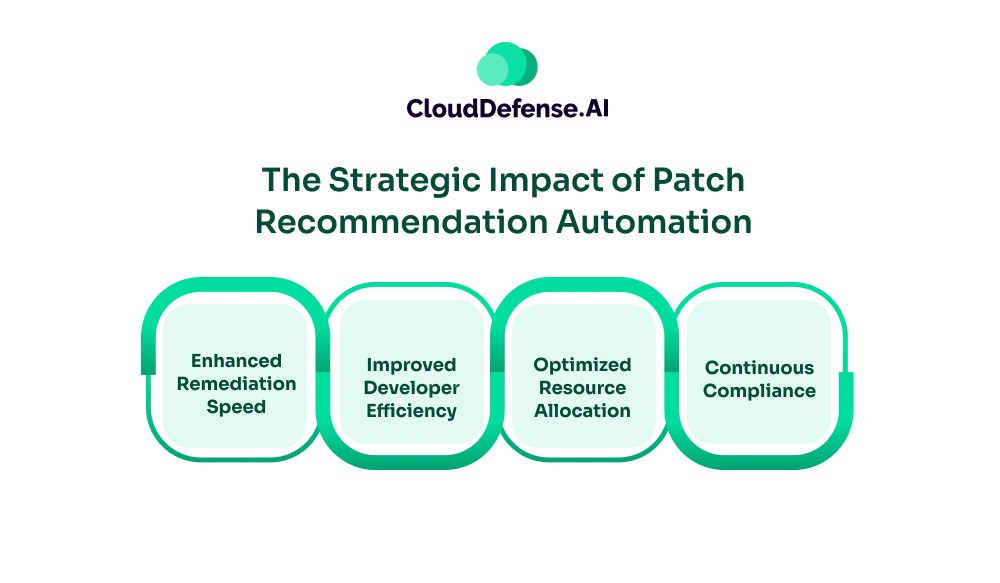
The Strategic Impact of Patch Recommendation Automation
High MTTR has been a common issue with legacy security tools, as it only provides alerts about the vulnerability and not how it can be fixed. Developers have to spend a lot of their productive time finding appropriate fixes, delaying the remediation. However, patch recommendation automation helps teams to overcome it.
Modern security tools powered by AI don’t just send alerts regarding flawed code; they perform contextual analysis and send an appropriate fix for the alert. It identifies the secure fix available for the particular flawed code and delivers the automated patching suggestions. When an enterprise implements vulnerability fix automation, it helps them to move beyond shift left and employ a shift smart strategy.
The integration of automation helps enterprises with many vital benefits:
- Enhanced Remediation Speed: With automated patching suggestions along with appropriate vulnerability location, it becomes easier for developers to make changes. Rather than researching for days or hours to find an appropriate solution, developers can easily approve the fix and bring down MTTR to a few minutes.
- Improved Developer Efficiency: When a developer gets their remediation suggestion on their IDE or development environment, it significantly improves efficiency. Teams are able to save a lot of hours by overcoming all the manual tasks and focusing on the strategic development as well as security tasks. Moreover, automation eliminates all the errors that can be made by humans.
- Optimized Resource Allocation: Automation eliminates all the manual processes within the workflow, freeing security professionals from additional tasks. Moreover, security teams won’t have to engage for long hours using different operational resources. As a result, they are able to channel the resources for active threat modeling and other strategic security tasks.
- Continuous Compliance: When an organization implements vulnerability fix automation, it also benefits the team in efficiently maintaining compliance. As all the security threats are fixed quickly, it helps the team to adhere to the stringent security regulations and stay audit-ready. Tools offering automation in remediation provide a centralized dashboard that offers patching reports and real-time compliance data.
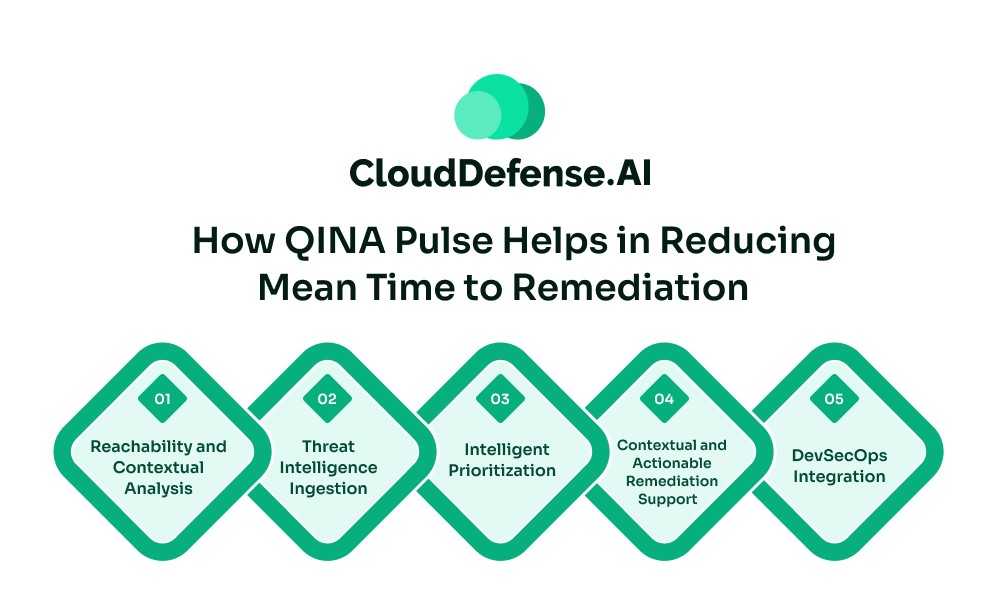
How QINA Pulse Helps in Reducing Mean Time to Remediation
Even though many security tools claim to provide appropriate solutions, QINA Pulse makes itself stand out with its high contextual and developer-friendly remediation guidance. It serves as an intelligent security co-pilot that, through smart automation, eliminates the gap between detection and remediation. Pulse integrates natively with the SDLC to deliver an intelligent and effective patch recommendation automation.
But how does Pulse help in reducing MTTR? Here is how:
Reachability and Contextual Analysis
A distinctive feature of QINA Pulse is that it leverages reachability analysis along with advanced visual code flow analysis to determine the impact of flawed code. The analysis highlights whether the flawed code can be triggered through user input within the application.
It is highly useful in identifying all the dead code or functions that might be vulnerable by nature but won’t have any impact on the application. As a result, Pulse enables developers to focus on real risk, cutting out all the backlogs and ensuring reduced MTTR.
Threat Intelligence Ingestion
Pulse continuously ingests threat data in real-time from hundreds of threat intelligence sources, including known vulnerability databases and vendor advisories. This allows the tools to identify many unknown or zero-day threats that are not present in standard vulnerability databases. It allows the enterprise to quickly respond to unknown threats and contain them before they make an impact.
Intelligent Prioritization
Every vulnerability has a specific level of risk. Pulse leverages an intelligent prioritization workflow where it assesses all the reachable flawed code based on the exploitability, business impact, and other architectural aspects. Pulse also leverages the LLM analysis data to understand how quickly vulnerable code needs to be fixed.
Based on the impact level, Pulse prioritizes all the alerts and eliminates all the false positives. It enables teams to quickly work on high-level and zero-day vulnerabilities before they are exploited.
Contextual and Actionable Remediation Support
An important feature of QINA Pulse is its ability to offer precise and contextual automated patching suggestions for all the alerts. Instead of just providing a generic fix, Pulse delivers a step-by-step remediation suggestion specifically designed for the code flow.
Moreover, it delivers code snippets along with the remediation guidance to help developers to quickly fix the threat. For certain vulnerabilities, it even allows developers to deploy automated playbooks and solve threats without requiring interventions. Importantly, the remediation suggestions are directly provided in the development environment, mostly as automated pull requests.
DevSecOps Integration
For reducing the mean time to remediation, Pulse integrates natively with different development environments. It streamlines the QINA Pulse remediation workflow as all the suggestions are directly fed into the development environment and CI/CD pipeline.
It allows the developers to go through the patch recommendation and merge it without requiring them to switch context. This is highly useful in preventing any bottleneck in the remediation workflow and improving MTTR.
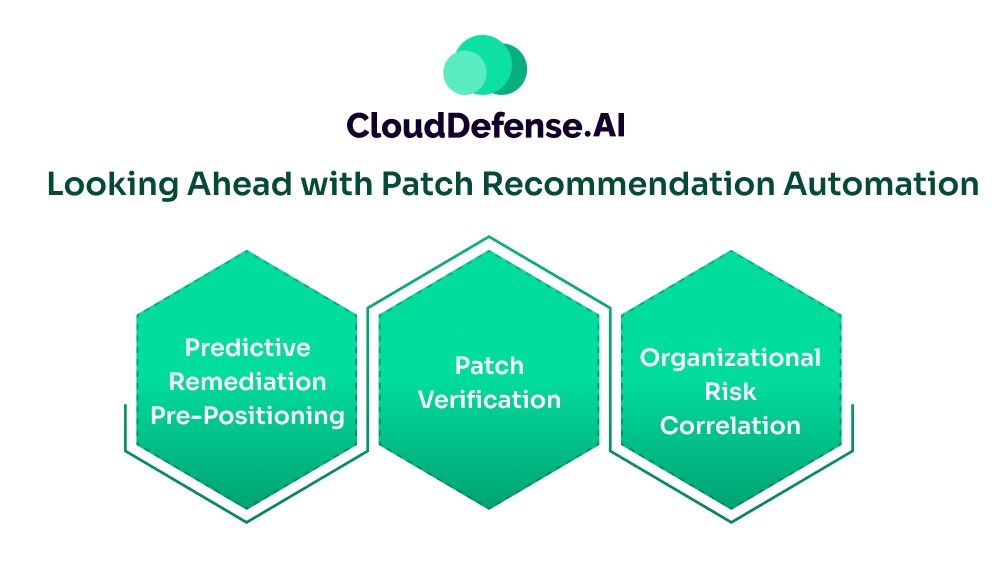
Looking Ahead with Patch Recommendation Automation
Patch recommendation automation is going to evolve with time. The evolution highlights many advanced capabilities that will further streamline the remediation workflow, ensuring minimal MTTR.
The future capabilities that enterprises can leverage for their long-term vulnerability management are:
- Predictive Remediation Pre-Positioning:It is an advanced vulnerability fix automation capability that pre-positions all the remediation packages in the endpoint management system. The pre-positioning is done based on the behavior and threat signals before a vulnerability is officially highlighted. It will bring down the MTTR from hours to minutes and ensure a robust AppSec posture.
- Patch Verification: Although still in the development stage, this capability extends the patch recommendation automation in the post-deployment stage for verification. It helps developers confirm that the vulnerability is successfully eliminated and no regression has been detected. It greatly accelerates the remediation workflow and helps enterprises stay ahead.
- Organizational Risk Correlation: This ability introduces a collaborative intelligence model where security tools will ingest anonymized remediation data from peer organizations. It will enable the tools to identify and factor different threat patterns seen across organizations with similar environments.
Bottom Line: AI-Powered Automation is the Answer
In the modern era, where attackers are operating at the speed of a machine, involving manual remediation processes in vulnerability management is no longer sufficient. Organizations require a developer-centric approach that will not only automatically alert the developers but will also provide patch recommendation automation.
Enterprises by adopting QINA Pulse can empower their developers to get contextual automated patching suggestions and respond to threats quickly. Developers won’t have to brainstorm for the remediation process and deploy the code fix offered by Pulse. The outcome? A secure application security posture, a better productive development environment, and MTTR in minutes.